
FEELING GREAT: How going barefoot could be a step forward for some of us
The easiest way to protect your knee joints when walking or running is by wearing shoes that are comfortable, well-cushioned and appropriate for the activity you're doing.
However, a new trend in the fitness world is slowly gaining attention – barefoot running.
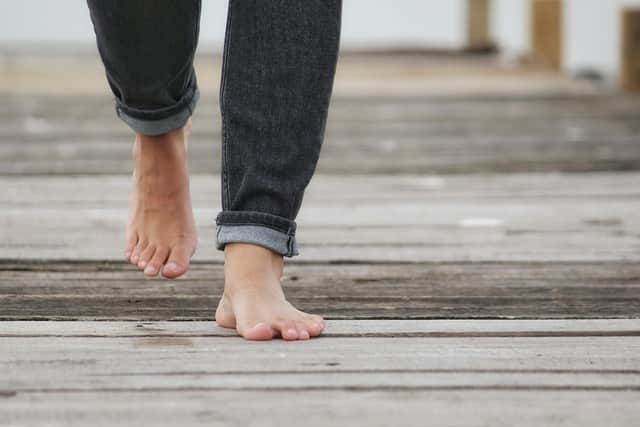

Barefoot running or walking, encourages a natural gait – the technique humans were originally designed to use. It’s thought that running or walking barefoot, or in minimalist shoes, strengthens the feet more than wearing traditional shoes. Additionally, it can be better for your knees because it offers a more natural way to run.
To explain this, think about what happens when you wear a knee support or plaster cast. After a period of use, when you remove it, the muscles around the knee will be weaker due to inactivity.
Similarly, when we wear shoes all the time, our feet become weak because they don't get to work as they would barefoot. This leads to less support for the knees, which can cause bones to rub together more, increasing the risk of developing conditions like osteoarthritis over time.
Wearing shoes also reduces your awareness of the impact on your feet.
When you wear shoes, you don't fully feel the pounding each time your foot lands, which can result in harder, more forceful steps.
This constant impact doesn't just affect the feet – it also affects the knees, hips and lower back, as they bear the brunt of the impact. Think about how you walk when you step outside barefoot; you take smaller, more cautious steps. This heightened awareness is one of the reasons barefoot running can be beneficial.
It also helps reduce the pressure on knee joints because you tend to land more softly. It can also teach you a better running technique, making your movements more efficient and less taxing on your body. This could lead to fewer injuries and, over time, a more natural and healthier way to run.
If you're over 50, it might be difficult to make the switch to barefoot running, as your walking habits may already be ingrained. Start slow and pay attention to each step. Your feet and ankles may be weak at first, but over time, they’ll become stronger and your body will be more resilient than ever.