
Fundraising appeal launched by Durham Wildlife Trust to support conservation work at famous Get Carter movie beach
A fundraising appeal is being launched to support nature on the beach which starred in iconic film Get Carter.
The brutal climax of the 1971 movie, starring Michael Caine, was set around the coal-blackened beach at Blackhall Rocks.
Fifty-five years on, the grim industrial landscape has been transformed into a nature reserve due to Durham Wildlife Trust launching a conservation programme following the closure of Blackhall Colliery in 1981.
Now the trust is asking nature lovers to donate to the Earth Raise appeal so it can continue to support nature on the site and other magnesian limestone grasslands in


the region.
The Earth Raise appeal runs from April 22 to 29 with donations during the week being doubled by the Big Give charity.
After April 29, the trust will continue to fundraise through its own Magical Meadows campaign.
Of the 400 hectares of magnesian limestone grasslands in the UK, two-thirds are in the North East – in Durham, South Tyneside and Sunderland – with Durham Wildlife Trust
managing 100 hectares.
Trust ecology manager Mark Dinning said: “This appeal is extremely important because magnesian limestone grasslands are very special to the North East and it’s a chance for people to support nature in landscapes that give life to some rare and interesting species.
“Every pound they give will be doubled in the week of the Earth Raise appeal, enabling us to carry out more conservation work and protect these beautiful landscapes for future generations.”
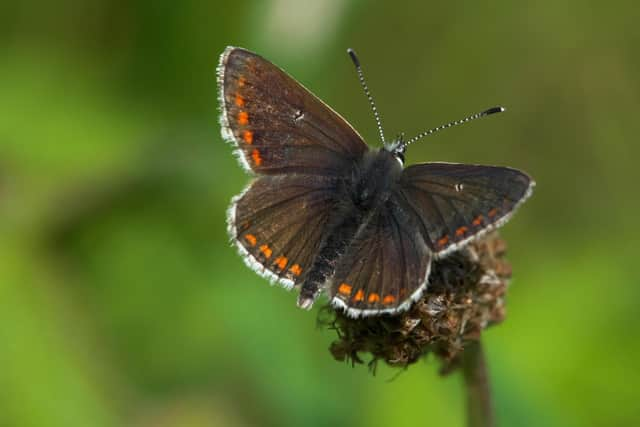
Of particular interest on the landscapes is the northern brown argus butterfly.
Between the 1980s and 2020, the northern brown argus declined by 57 per cent nationally although Blackhall Rocks remains a stronghold thanks to the ongoing conservation work.
The appeal has been backed by Steven Winrow, one of the Durham Wildlife Trust volunteers, who played on the site as a child.
Steven, who also worked as an electrician underground at the colliery from 1973 until its closure, helps with scrub clearance, repairing fences, and wildlife surveys.
He said: “It’s changed beyond recognition. From being desolate, it’s become a stunning place.
“This is where I grew up, so I want to put something back. I love it here but we have to keep helping nature to thrive, and that’s why the appeal is so important.”
To make a donation, go to www.durhamwt.com