
Hartlepool Biffa recycling boss makes plea after over 100,000 fire-risk vapes discarded in two months
A Hartlepool recycling plant had to remove more than 100,000 dangerous vapes in just two months.
A boss at Biffa waste management is now appealing to vape users not to put the devices in their recycling bins after the plant had to take out almost 111,000 in December and January alone.
Richard Nicol, Biffa’s resource and energy division head of commercial based in Hartlepool, said the volume of discarded vapes arriving at the site is creating major safety concerns.
He said vapes are currently the most serious hazard entering the recycling stream and is urging householders to take them to designated drop-off points rather than putting them in recycling bins.
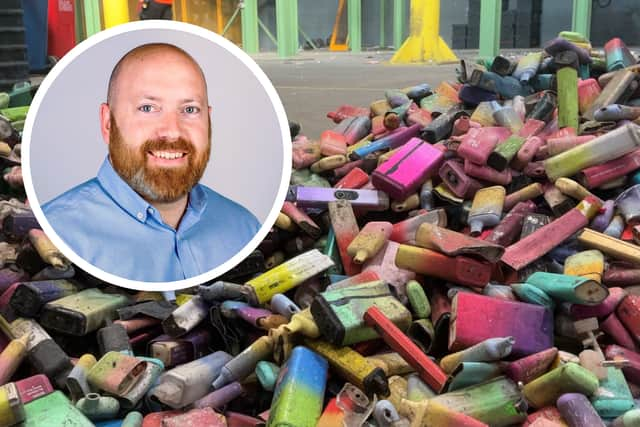

The plant on the Tofts Farm industrial estate processes material from four councils, including all of County Durham’s household recycling, amounting to around 2,200 tonnes of waste every week.
But Mr Nicol says the growing number of vapes being placed in recycling bins is putting workers and equipment at risk.
He said: “If there is one thing I would want the public not to do, it would be to put vapes in their recycling bins.
“Lithium batteries never fully run out of charge. They’re a fire hazard in bin wagons and at recycling centres and they put lives at risk.”
The UK recycling industry as a whole recorded 1,200 fires across its sites last year, many of which were linked to lithium batteries.
Mr Nicol said even a single vape can contaminate or destroy an entire bale of recyclable material.
He said vapes can be recycled, but only through the correct routes. These are household waste centres, specialist retailer drop‑off points or vape‑shop recycling bins.
Mr Nicol believes that most people who put vapes and other battery‑powered items in recycling bins are not acting maliciously but are “wish‑cycling”, assuming that anything containing plastic is suitable for recycling.
And he stressed that all batteries, not just lithium ones, should not be put into the recycling for fear of combustion.
“Items like electric toothbrushes, chargers or laptops might look recyclable, because of the large amount of plastic they contain, but anything powered by a battery is not,” he said.
“The key things we’re interested in are always glass, plastic and cans.”