
What did archaeologists find during Hartlepool’s recent excavation project?
Hartlepool excavation efforts have now come to an end as archaeologists worked to uncover a forgotten part of the town’s wartime heritage.
The Clavering sound mirror played a major role in fending off a Zeppelin attack near the town in November 1916 when it picked up the sound of approaching aircraft, alerting civilians and anti-aircraft guns to danger.
The sound mirror was the only early warning system Britain had until radar was introduced in 1938 and stood alongside five other mirrors along the North-East coast until it was demolished in the 1960s to make way for housing.
While archaeologists and volunteers did find pieces of concrete that may have formed part of the sound mirror, it is impossible to know for certain.


Robin Daniels, archaeology officer at Tees Archaeology, said: “The archaeological evidence indicates that the area was heavily disturbed during the construction of the road and the housing estate.
"We did encounter some pieces of concrete that may have been from the sound mirror but it is impossible to be certain.”
Vicky Ward, access and volunteer officer at Seascapes, which organised the dig, said: “From our perspective, the project has been incredibly successful.”
She added: "It has enabled local history and heritage to be brought to life again and the project captured the imagination and interest of the local community.”
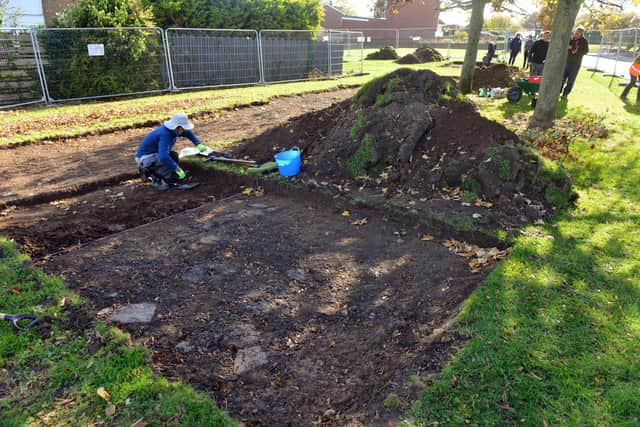
Tees Archaeology will be hosting a community workshop in Clavering within the next few months to report back on the excavation findings.
Plans are also currently in place for a community archaeology project to take place in Seaton Carew next spring.
More information will be available in the new year.