
20 years on from the death of Brian Clough and his time at Hartlepool, Derby, Nottingham Forest and Leeds
For those first weaned onto football at the outset of the Premier League, Brian Clough might have seemed a sad, almost tragic figure.
May 1, 1993 was the end of the beginning for the new-look top flight, but for Clough it was the final curtain as his Nottingham Forest side lost 2-0 at home to Sheffield United and ended the season bottom.
The manager, ruddy-faced through years of heavy drinking, had just led Forest down and seemed a jarring anachronism in this new razzmatazz-and-fireworks era, yet the reception for Clough at the start and end of the match at the City Ground was one befitting a hero.
The plaudits could not have been more richly deserved. Here was a manager who, in the opinion of many – including himself – could make a valid claim to be the greatest British football had ever seen.
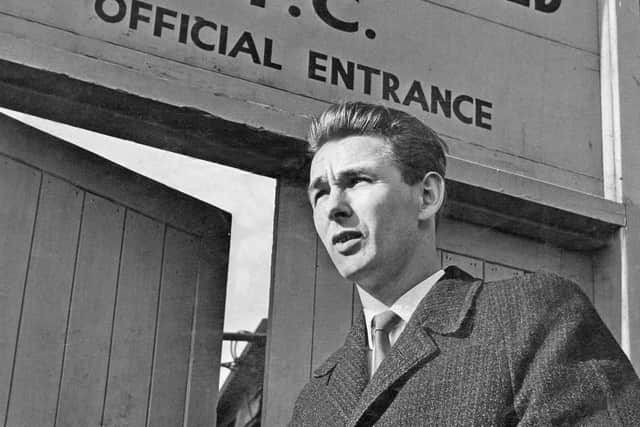

Two European Cups, two league titles, four League Cups, one European Super Cup and one second tier title is an excellent record in anyone’s book.
To have achieved all that with two teams – Forest and Derby – who had never been as successful before, or indeed since, makes it extraordinary, and is the reason why, 20 years on from his death from stomach cancer in September 2004, he is still so fondly remembered.
As a player, Clough joined Middlesbrough as a 17-year-old in 1952 but it took the dark-haired striker three years to break into the first team.
Once he did, however, he did not look back and he was Boro’s top scorer for three seasons in a row.
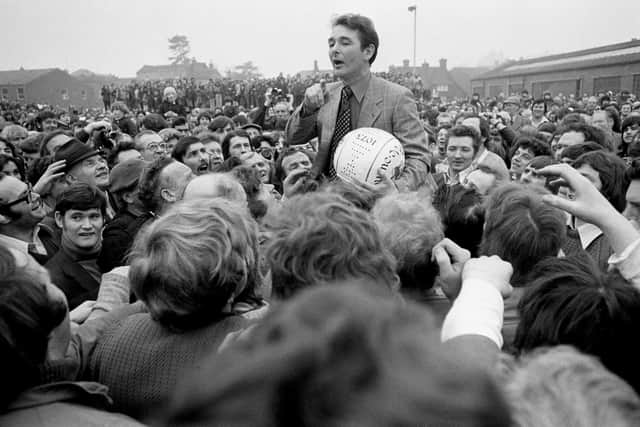
Finishing his Ayresome Park career with 204 goals from 213 games, Clough made the short journey north to join Sunderland where his career was cruelly cut short after colliding with a goalkeeper.
His managerial career also began in his native north-east at the age of 30 with Hartlepool, then in the old Fourth Division.
It was a humble start for the man who would one day be proclaimed “the best manager England never had” but he was already putting in place the elements which would bring such huge success later on.
Bringing in close friend Peter Taylor was the masterstroke. Clough, as he would so often again, wrung every ounce of ability out of the players around him through a mixture of reverse psychology, tough training, an almost evangelical pursuit of football in its purest form and, in some cases, little short of bullying.
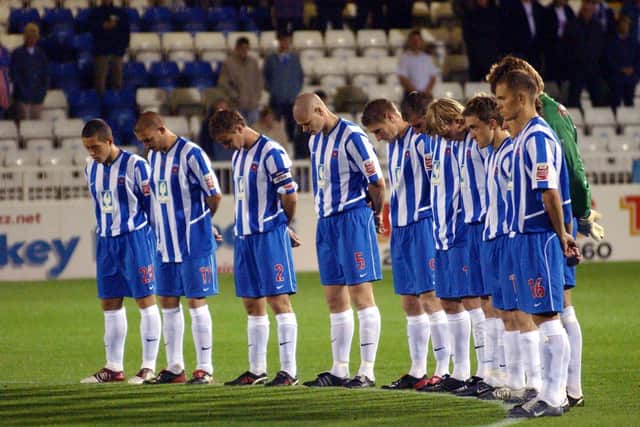
Pools won promotion for the first time in their Football League history at the end of the 1967-68 season, but by the time everything had come together at Victoria Park, the men responsible for their success had moved on to a new challenge.
Derby were languishing in the old Second Division when Clough took over at the Baseball Ground in 1967. Six years later they were playing in the semi-final of the European Cup against Italian giants Juventus.
He took Derby up to the old First Division in his first full season in charge and in 1971-72 the Rams won the league title for the first time in their history.
By the time he left after a fall-out with chairman Sam Longson for Brighton, the stories of Clough’s methods – some would say madness – were legendary.
Seen on television telling one of his strikers that they “wanted bloody shooting” for missing a chance – in training – it was clear he was a man who expected everyone around him to meet his high standards.
His one-year spell at Brighton ended in 1974 when he was chosen to succeed the legendary Don Revie at Leeds.
The move did not work out for Clough or the Yorkshire club as his tendency to speak his mind wound up the team of champions he had inherited and within 44 days he was on his way out of Elland Road.
Such a short stay dented Clough’s previously glowing reputation, so when he returned to the east midlands to take over at Nottingham Forest in January 1975 he had to prove himself all over again. His response was emphatic.
It took Clough slightly longer to turn Forest’s fortunes around than it had at Derby, but the end result was far greater.
Promotion was gained in 1976-77, and a year later, incredibly, they were champions of England and League Cup winners for good measure.
If the Forest fairytale had ended there it would have been incredible enough. But in 1979, a diving header from Trevor Francis, Britain’s first £1million player, secured the European Cup with a 1-0 win over Swedish side Malmo.
A year later, as if to prove it was no fluke, Forest won the European Cup again by beating Hamburg 1-0 thanks to a strike from Robertson.
Clough could have retired there and then and been deified in Nottingham, but he was to spend another 13 years at Forest.
As players came and went and Clough misfired on the transfer front, his partnership with Taylor dissolved.
Forest never again matched the achievements of 1979 and 1980, and the only thing left for Clough to achieve, it seemed, was to transfer his success at club level to the international game.
He was for years the people’s choice to manage England, but the prospect of the brusque, often deliberately rude man from working-class Teesside stock rubbing shoulders with the grey establishment suits of the Football Association was one that frightened the latter too much.
He won the League Cup twice more in 1989 and 1990 and added the less illustrious Simod Cup and Zenith Data Systems Cup to Forest’s silverware collection.
He was still eminently quotable and was always in the news, once for cuffing a fan around the head for having the temerity to run onto the pitch, but the miracles were at an end.
Old Big Head he may have been, but his record backs up the boastfulness.